Three weeks before a villa handover in Arabian Ranches, the contractor realizes the plumbing spec calls for PPR pipes that aren’t in stock anywhere. The mechanical drawing specifies a water heater that the developer promised but nobody confirmed with an MEP material supplier. The electrical bill of quantities references three different valve types from four different manufacturers.
This is what happens when contractors and developers don’t know who to call for MEP materials—and what knowing the right supplier actually prevents.
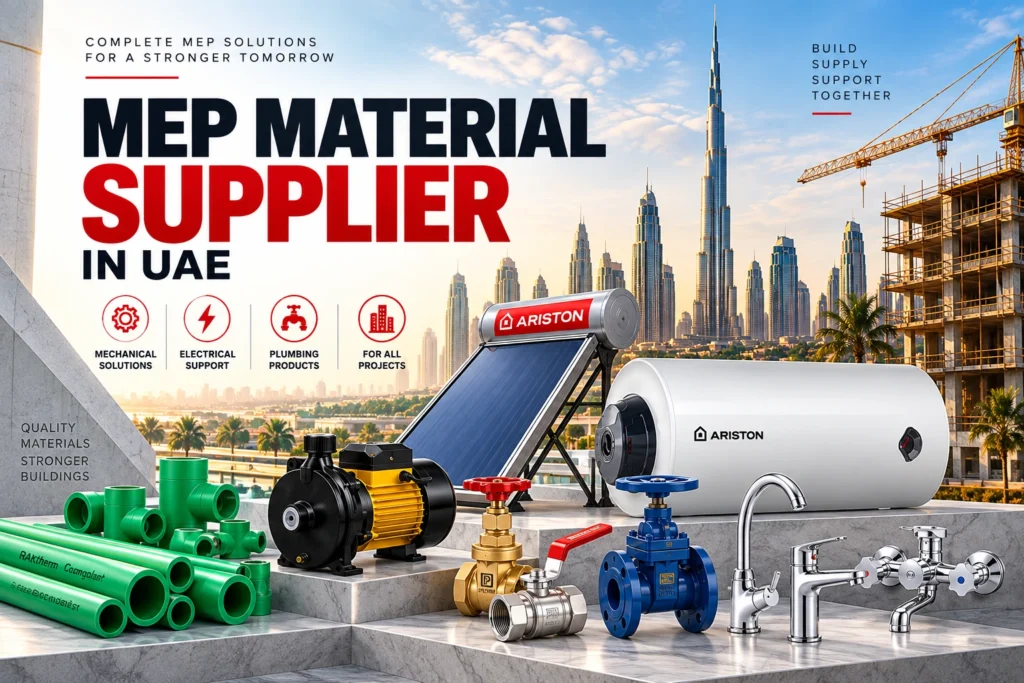
An MEP material supplier UAE isn’t just someone who stocks pipe. They’re the difference between a project that scales smoothly and one that gets held up by spec changes, unavailable brands, or BOQ mismatches that nobody caught until week eight.
What Is an MEP Material Supplier?
An MEP material supplier stocks everything Mechanical, Electrical, and Plumbing contractors need to build. Not just pipes. Not just valves. The full ecosystem—from rough-in materials through finish products, tested to work together, available when you need them, and backed by people who actually know what gets installed where.
Most contractors work with eight to twelve suppliers. A good MEP supplier condenses that. They hold three categories under one roof, manage your BOQ without you rewriting it five times, and understand that month-to-month your requirements shift.
What Does MEP Include?
The letters break down exactly: Mechanical, Electrical, Plumbing.
Mechanical Materials
Water heaters, hot water circulation systems, radiators, thermal insulation, glycol mixtures for solar systems, expansion tanks, and all the copper and plastic piping that carries heated water through a building. Commercial projects need much larger capacities—hotels and office complexes run centralized systems that domestic villas never touch.
Electrical Materials
Cable, conduit, circuit breakers, distribution boards, control systems, and wiring from mains through every outlet. Not specialized electrician-only components. The material side of what gets bid.
Plumbing Materials
Pipes in every type (PPR, PEX, uPVC, copper), fittings, valves, washbasins, toilets, taps, and all the infrastructure that moves cold water, hot water, and drainage. Plumbing materials supplier UAE stores in massive volume because a single villa needs hundreds of fittings alone.
Why MEP Materials Are Important for Construction Projects
Miss on MEP materials and your whole project timeline compresses or breaks. Here’s why it actually matters.
Product Compatibility A RAKtherm PPR pipe system needs compatible fittings. You can’t thread a Pegler valve designed for copper onto a plastic pipe and expect it to seal. Every brand has its ecosystem. An MEP materials supplier understands those networks and won’t cross-match incompatible components—because that mistake costs you callbacks and rework.
Quality & Reliability Not all 20mm PPR pipe is equal. Not all water heaters perform at their rated capacity in UAE heat. Authorized distributors know which brands actually work in Gulf climates, which ones need protection from direct sun, and which ones fail in hard water. A Ariston water heater from an authorized dealer comes with proper documentation and real support. Grey market equivalents don’t.
Project Coordination A contractor calling twelve suppliers to assemble one BOQ wastes time. One MEP supplier handling Mechanical products, Electrical stock, and a full plumbing catalog means one invoice, one delivery schedule, one contact when something doesn’t show. That coordination ripple cascades through your timeline.
MEP Materials Supplied for UAE Projects
Here’s what you’re actually sourcing when you specify an MEP material supplier.
Plumbing Pipes & Fittings
Most UAE residential projects run PPR or PEX from the main line through to fixture branches. Commercial projects mix it—copper in high-traffic areas, PPR where cost matters and reliability is guaranteed.
RAKtherm PPR Pipes
RAKtherm PPR dominates UAE because it’s locally stocked, UAE-tested in high heat, and available in every size from 16mm up to 63mm. A villa typically needs 250–400 meters of PPR across cold lines, hot lines, and circulation loops. The brand works consistently here. That’s not theory—that’s what gets specified on every second project sheet.
When you’re sourcing RAKtherm PPR pipe, work with a dealer who stocks the full range and can tell you which diameter runs where based on your flow calculations.
RAKtherm PEX Pipes
PEX offers flexibility PPR doesn’t. It’s easier to route, doesn’t require soldering or welding, and it bends around obstacles. Cost runs higher. You see it in renovation projects more than new builds, or in commercial spaces where routing gets complicated.
RAKtherm uPVC Pipes
uPVC is drainage-specific. Grey water, sewage, and vent lines. It’s not pressurized, so it won’t fail catastrophically, but it does crack if exposed directly to sun for years. Buried or shaded, it lasts 30+ years. Exposed, maybe 15.
Cosmoplast Pipes & Fittings
Cosmoplast competes hard in UAE. Their PPR offering undercuts RAKtherm on price and still performs. You see it in mid-range projects. The fittings quality is solid—brass cores, consistent tolerances. One contractor told me he alternates between brands on big projects to keep costs down without cutting reliability.
Plumbing Valves
Valves stop water, regulate pressure, isolate sections for maintenance, and sit at every major point in the system. Cheap valves leak. Bad valves create callbacks. Good valves disappear into the walls and never surface.
Pegler Ball Valves
Pegler makes the valve that gets installed by every serious contractor in UAE. Full port, quarter-turn, lasts twenty years without service. You find them on cold lines, hot lines, circulation returns—anywhere you need reliable isolation. Pegler authorized distributor UAE stock matters because counterfeits exist and they fail in ways you don’t catch until the house is occupied.
Pegler Gate Valves
Gate valves slide parallel to flow—slower to operate than ball valves, takes more turns, but lower resistance when wide open. You see them less in residential (ball valves are simpler), more in large commercial lines where lower pressure drop across hundreds of meters actually adds up.
Pegler Globe Valves
Globe valves throttle. They don’t just on/off—they regulate flow. Typical on hot water circulation lines and on mixing valve outlets where you need to balance temperature. Slower to turn than ball valves. More complex internally. Necessary for certain jobs, overkill for others.
Valves for MEP Projects
The rookie mistake: not installing enough isolation points. Contractors spec main shut-offs and fixture shut-offs and forget the isolation between. When the mixing valve fails at 2 AM, you drain the whole house if you can’t shut off just the hot line. Build in redundancy.
Pipe Clamps & Supports
Pipes sag under their own weight and the weight of water inside them. Clamps every 1.5 meters on PPR horizontal runs, tighter on vertical. Loose clamps rattle. Missing clamps are how you end up with a slow sag that creates pooling water that stagnates.
Plumbing Pipe Clamps
Rubber-lined metal clamps that don’t crush the pipe. Galvanized for longevity. Stainless for high-end or exposed applications. Cost differs; durability doesn’t much.
Pipe Support Requirements
UK standards call for support every 0.8 to 1.2 meters depending on pipe size and temperature. UAE often runs tighter due to heat—longer unsupported spans mean thermal expansion that stresses fittings.
Applications in MEP Installations
Horizontal runs in ceilings, vertical runs in chases, roof penetrations, underfloor routes. Every environment has different spacing rules. An MEP supplier who knows this saves you rework.
Water Heating Materials for MEP Projects
Every UAE building needs hot water. Climate doesn’t provide it. The size and type depends on occupancy, usage patterns, and whether you’re going solar (increasingly common in new construction).
Electric Water Heaters
Fast, reliable, expensive to operate, but simple to install. Most villas in Dubai run electric water heaters because the installation cost stays low and the energy cost gets absorbed.
Ariston Water Heaters
Ariston dominates premium residential. The 150-liter capacity works for most 4-5 bedroom villas. 100-liter for smaller units, 200-liter if you have multiple bathrooms running simultaneously. Ariston 150 litre water heater specifications and proper installation matter—mounting height, inlet/outlet orientation, and thermostat calibration affect performance more than most people realize.
Zenith Water Heaters
Zenith offers good mid-range performance. Less expensive than Ariston, decent lifespan, commonly found in apartments and smaller villas. You get what you pay—slightly lower insulation means more standby loss.
Fresh Water Heaters
A smaller, less-known brand that actually performs well. Thermostats are solid. The real downside: service centers are fewer. If it fails after warranty, finding parts takes longer.
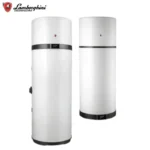
Lamborghini Water Heaters
Lamborghini (no relation to cars—Italian brand) occupies similar space to Fresh. Smaller distributor network. Solid product, just less common. Contractors who’ve used them report good durability but note that replacement is harder than with Ariston.
Aquahot Water Heaters
Compact, slim profile, designed for tight spaces. Performance is solid but the brand presence in UAE is smaller. Installation matters more because space constraints often drive the choice toward Aquahot in the first place.
Thermex Water Heaters
Budget option. Thermex heaters work adequately for basic use. The insulation is thinner. Standby losses run higher. A villa with unpredictable occupancy (second home, rental) might make sense; a primary residence—Ariston or Zenith usually justifies the bump.
Solar Water Heating Systems
Solar heaters save 70–80% on water heating energy in UAE. The payback in hot climates runs 5–7 years. New builds are increasingly specifying them; retrofits happen when owners want to reduce bills.
Solar Water Heaters
Flat-plate collectors bolted to roofs, usually 4–6 square meters for residential. Output depends on sun hours—UAE gets consistent year-round solar gain, so performance is predictable. Winter production still runs 50–60% of summer.
Solar Storage Tanks
A solar system feeds into a tank; the tank buffers between solar production and demand. Sizes range from 150 liters (small villa, light use) to 500 liters (large household, heavy use). Tank insulation matters enormously. Poor insulation means overnight losses that leave you with tepid water by morning.
Solar Pipework & Connections
Copper piping from collectors to tank—heat-rated for 90°C or higher. Fittings must be brass or stainless; ordinary plumbing fittings don’t survive. Glycol mix in the loop (not water) prevents freezing and boiling. Most UAE contractors get this right, but the percentage that forget glycol concentration still shocks me.
Hot Water System Components
Beyond the heater itself, the distribution system determines whether hot water reaches the tap or stays stuck in the pipe.
Hot Water Distribution
Pipes run from the heater through the building. Long runs mean long wait times—you turn on the tap and twenty seconds of cold water flow before hot arrives. Circulation loops solve this: a pipe runs from the heater to the furthest fixture and back, with a small pump pushing water constantly. Cost jumps but convenience increases dramatically.
Valves & Connections
Mixing valves on the main outlet regulate temperature—a safety feature preventing scalding. Thermostatic mixing valves maintain set temperature even if main pressure shifts. They cost more but perform better in high-demand scenarios (hotel, residential complex).
Water Circulation Requirements
A circulation loop needs its own thermostat and pump. Size the pump for head loss across pipes and fixtures. Oversizing wastes energy; undersizing leaves dead legs where water stagnates. Most contractors spec a basic pump; better ones calculate actual demand.
Water Pumps for MEP Projects
City water pressure isn’t always enough. Villas on higher floors, buildings with rooftop pools, pressure-dependent systems—they need their own pump. Wrong pump choice kills your margin or leaves the client complaining about low flow.
Domestic Water Pumps
Residential pumps run 1–2 HP, capable of moving 50–100 liters per minute against typical residential pressure. They sit in a tank, lift water from the tank, or boost from city supply.
Villa Water Supply
A villa on high ground might need a booster pump pushing 30 liters per minute against 2-3 bar head. That’s a 0.75 HP pump, 1500 watts continuous. Run it continuously and your electricity bill will reflect it. Size it correctly and it runs intermittently.
Residential Buildings
Apartment blocks need bigger systems. A 20-story building can’t run on city pressure alone—water to the roof unit is zero. Central pump rooms on mid-levels and roofs handle distribution. Flow requirements reach 200+ liters per minute.
Commercial Water Pumps
Commercial systems run constantly, handle high demand variability, and must meet reliability standards. A hotel pool needs continuous flow; a restaurant kitchen demand is erratic; an office building runs mostly office-hour demand.
Offices
Office water demand is predictable and mostly low—drinking, restrooms, cleaning. Sizing a pump for peak (all floors using toilets simultaneously) over-specs; sizing for average leaves low pressure at peak. Most spec for 70% peak demand and accept slight pressure dips during busy times.
Hotels
Hotels run high, constant demand. Room occupancy, kitchen use, pool circulation, laundry. Central pumping with pressure tanks, and backup systems because failure = guest complaints + reputation hit. Commercial MEP suppliers handle these differently from residential.
Commercial Buildings
Mixed-use buildings have mixed demand patterns. Ground-floor retail spikes differently than upper-floor office. Good design separates zones and pumps—a 5-story retail podium under 25 floors of office gets its own pump solution.
How to Select a Water Pump
Three numbers determine your pump: flow requirement, head requirement, and power consumption.
Flow Requirements
Calculate the liters per minute your system needs at peak demand. Villa: 60 liters per minute is standard (multiple showers, toilets, kitchen). Apartment building: 200+ liters per minute. Commercial: depends on use case but count conservatively.
Head Requirements
Head is the height you’re lifting water plus pressure you need to overcome in the pipe. A villa on top of a hill 50 meters above city supply needs 5 bar head minimum (50m lifts you 5 bar). Add pipe losses—typically another 1–2 bar for residential runs.
Building Water Demand
Real demand is 70–80% of theoretical peak. Everybody showering at once is fantasy. Size your pump for realistic peak, not fantasy peak. Oversized pumps waste energy; undersized pumps look cheap until they’re running continuously just to maintain base pressure.
Sanitaryware, Taps & Mixers for MEP Projects
Sinks, toilets, and taps aren’t strictly “MEP materials” but they’re part of the plumbing spec. Contractors coordinate them with the MEP material supplier because timing, rough-in heights, and outlet locations come from the MEP drawings.
Grohe Sanitaryware
Grohe is the default in mid-range and premium UAE projects. Their products are specification-heavy and available through MEP suppliers.
Wash Basins
Grohe vessels come in ceramic or stone, wall-hung or countertop. Sizing from 450mm to 750mm width. Material quality is consistent—thick ceramic, good glaze.
Toilets
Grohe toilets run efficient water use (less than 6 liters per flush in modern spec) and solid ceramic. Close-coupled models save space; wall-hung models cost more but maximize visual space.
Bathroom Products
Mirrors, shelving, accessories—Grohe bundles them. Matching sets look finished.
Grohe Taps & Mixers
Taps and mixers sit at every sink, shower, and kitchen point. They control water flow and temperature, and poor choices create maintenance headaches.
Basin Mixers
Basin taps range from basic (two separate knobs you mix yourself) to sensor-actuated (touch activates flow). Grohe basin mixers span that range. Chrome plating on most; stainless or matte black on premium finishes.
Kitchen Mixers
Kitchen mixers handle higher flow than bathrooms. Extractable spray heads for cleaning pots. Grohe kitchen mixers are robust—the pullout mechanism survives years of heavy use better than cheaper alternatives.
Shower Mixers
Thermostat mixing valves on shower systems prevent scalding if cold supply drops. Grohe thermostatic mixers maintain set temperature within 1–2°C. Manual mixing valves (cheaper) are accurate only when pressure stays stable.
Bathroom Products for Different Projects
Different building types need different specifications.
Villas & Residential Buildings
Villas prioritize comfort and durability. Larger basins, quality finishes, thermostatic controls. Apartments optimize for space and cost—smaller footprints, simpler controls.
Hotels
Hotels need hospitality-grade products: heavy-gauge ceramics, quick-release cartridges for fast repairs, antimicrobial finishes. The cost premium is real; the durability advantage justifies it when you’re handling 100+ rooms.
Commercial Buildings
Commercial restrooms run high traffic. Vandal-resistant components, sensor activation to prevent water waste, stainless steel in high-traffic zones. Nothing pretty; everything durable.
MEP Material Supply for Different Types of Projects
Project type drives what gets ordered and how it gets coordinated.
Residential Projects
Residential is the baseline. Straightforward layouts, known product types, predictable BOQs.
Villas
Villas typically need more hot water per occupant than apartments (pools, larger bathrooms, more showers). Mechanical systems are usually simple—boiler and circulation, or solar + backup electric. Electrical demand is moderate. Plumbing is straightforward topography (no tall stacks).
Apartments
Apartments need central boilers serving dozens of units, requiring coordination across multiple apartment water lines. Individual unit control (shut-off valves at each apartment entry) is essential. Electrical is higher density per square meter.
Residential Buildings
Buildings over 10 stories need split systems—partial floors served by intermediate pump rooms. Water storage tanks on roofs. Electrical distribution through risers and sub-distribution boards on each floor. Coordination complexity jumps significantly.
Commercial Projects
Commercial adds layers. Higher occupancy, code requirements for large water bodies (pools), high-capacity HVAC, and redundancy expectations.
Offices
Offices run Monday–Friday, 8 AM–6 PM mostly. Demand is front-loaded in mornings (everyone arriving, restroom use) and evenings (leaving, restroom use). Mid-day demand is light. Sizing is straightforward if you pattern it right.
Hotels
Hotels run 24/7. Guests, staff, restaurants, laundry—constant demand. A 200-room hotel might handle 1000+ people a day. Redundancy is mandatory because a failure hits revenue immediately.
Restaurants & Retail Spaces
Restaurants have intense, unpredictable water demand during service hours and near-zero demand otherwise. Sizing for peak (lunch/dinner rush) over-specs for most of the day. Experience helps here—an MEP supplier who’s done restaurant fits knows the patterns.
How to Choose the Right MEP Material Supplier in UAE
Not all MEP suppliers are equal. Here’s what distinguishes a working relationship from a transactional one.
Check Product Range
A real MEP supplier stocks depth in multiple categories, not breadth in one.
Pipes & Fittings
Full PPR range (16mm through 63mm), PEX options, uPVC drainage, copper if needed. If they run low on stock regularly, they’re undersizing. If they overstock and turn slow, they’re overspending.
Valves
Ball, gate, globe, check, pressure relief—each type, multiple sizes. Not every MEP supplier bothers. You find the ones that do by asking specific sizes and seeing if they quote immediately.
Water Heaters
Electric (multiple brands), solar components, circulation pumps, tanks. Range matters. A supplier with only Ariston looks incomplete next to one with Ariston, Zenith, Fresh, and alternatives.
Pumps & Bathroom Products
Domestic and commercial pump sizes, basin and toilet options, mixer styles. If they make you source these elsewhere, they’re not a true MEP supplier—they’re a plumber’s wholesaler.
Check Brand Availability
Contractors specify brands for reasons: performance history, local support, warranty clarity, or simply “this is what we always use.”
Ariston
Ariston availability speaks to supplier reach. If they’re out of Ariston 150-liter units consistently, question their supply chain. Ariston is standard; it shouldn’t be hard to get.
Pegler
Same logic. Pegler valves are specified on most professional projects. Availability is table stakes.
RAKtherm
RAKtherm PPR is local stock in UAE. If an MEP supplier carries limited RAKtherm, they’re relying on manual imports or special order—slower, more expensive.
Cosmoplast
Cosmoplast is competitive; availability suggests they track market alternatives and cost pressures. Good sign.
Grohe
Grohe sanitaryware and taps. Not all MEP suppliers bundle this. The ones that do have thought about the full plumbing ecosystem.
Consider Project Support
Beyond stock, the supplier’s capability to guide your project matters.
BOQ-Based Supply
A real MEP supplier can work from your BOQ—take the list, cross-reference it, identify gaps or compatibility issues, and quote with changes highlighted. This saves you from discovering problems mid-project.
Bulk Product Requirements
Can they deliver 500 meters of PPR piping and fitting requirements for a single villa? 2000 meters for a residential building? Large quantities require logistics—reliable suppliers have managed both.
Product Selection Support
“I need a water heater for 30 people who shower daily—what size?” A supplier who answers this correctly (roughly 200 liters for 30 people with average consumption) saves the developer from costly oversizing.
Delivery & Coordination
Do they deliver, or do you pick up? Do they coordinate with your site schedule? Rush delivery capability? These operationals matter on tight timelines.
Why Work With a Reliable MEP Supplier?
Scale matters. So does reliability. Here’s the business case.
Multiple Product Categories Under One Supplier
One invoice. One delivery window. One point of contact for problems. If PPR doesn’t arrive but valves do, you sort it with one call, not three. If something’s damaged, one supplier handles the entire claim. This sounds small until you’re managing a building project with monthly material draws.
Consistent Product Sourcing
Suppliers you’ve worked with before know your preferences, your typical order patterns, and your problem areas. They anticipate what you need and keep it in stock. New suppliers need a learning curve.
Project-Based Supply
Good MEP suppliers bundle materials for projects, not just move units. They see the full scope, warn you if something doesn’t fit, and adjust when your design changes. This is the difference between a supplier and a distributor.
Support for Contractors & Developers
Contractors work against compressed timelines. Developers work with fixed budgets. Suppliers who understand both can say, “The spec calls for Ariston 150-liter but Zenith 150-liter performs equally and saves 8% cost”—and back it with experience.
Residential & Commercial Supply
Different scaling, different patterns. Suppliers skilled in both can resource both. Specialized suppliers get blindsided when projects shift from residential to fit-out or mixed-use.
MEP Material Supply Process
Here’s how a project actually flows from BOQ to installation.
Step 1 – Share Your BOQ or Requirements
You provide the bill of quantities or a detailed requirements list. If it’s rough (quantities estimated), say so. The supplier cross-references it against product specifications and availability.
Step 2 – Review Products & Specifications
The supplier presents options—primary specification, alternatives, cost differences, and stock status. You confirm or revise. This stage catches mismatches (brands not available, specs that don’t fit the application, quantities that don’t align with project phasing).
Step 3 – Receive a Project Quotation
A detailed quote, itemized by category, with delivery schedules and payment terms. Professional suppliers itemize—Mechanical products on one sheet, Electrical on another, Plumbing on a third. This helps accounting and keeps the scope clear.
Step 4 – Confirm the Order
Order confirmation locks price, quantities, delivery date, and payment schedule. Changes after this point get managed, but clarity upfront prevents surprises.
Step 5 – Arrange Project Delivery
Supplier coordinates delivery to site, typically weekly draws for ongoing projects or staged deliveries for phased construction. Logistics matter—materials arriving too early sit on site; arriving too late delay work.
Frequently Asked Questions About MEP Material Suppliers in the UAE
What does an MEP material supplier provide? Mechanical (heaters, circulation systems, insulation), Electrical (cable, conduit, boards), and Plumbing (pipes, valves, fittings, sanitaryware) materials for construction projects. Stock, technical guidance, BOQ coordination, and delivery.
How do I choose an MEP Material Supplier UAE? Check product range depth (not just breadth), brand availability, ability to work from your BOQ, and delivery reliability. Ask for references from contractors they’ve worked with.
Can an MEP supplier provide plumbing materials? Yes. Plumbing is one-third of MEP. Pipes, fittings, valves, mixing equipment, tanks, and sanitaryware.
Can I source water heaters for an MEP project? Yes. Water heaters, hot water tanks, circulation systems, and solar heating components are standard MEP stock.
Does an MEP supplier provide pipes and valves? Yes. Pipes in multiple types (PPR, PEX, uPVC, copper), fittings, and valves in all categories (ball, gate, globe, thermostatic mixing).
Can MEP materials be supplied in bulk? Yes. Bulk supply is the standard model for projects requiring hundreds of meters of piping or dozens of units of equipment.
Can contractors order materials according to a BOQ? Yes. BOQ-based ordering is how professional projects work. The supplier cross-references, identifies gaps, and quotes against your detailed list.
What MEP materials are commonly required for villa projects? PPR or PEX piping (250–500 meters), valves at major points (15–25 units), a 100–200 liter water heater, circulation pump, multiple basin mixers and toilet systems. Electrical and mechanical materials depend on HVAC system type.
Does Junaid supply MEP materials in Dubai and the UAE? Yes. Junaid supplies comprehensive MEP materials across residential, commercial, and renovation projects. They carry RAKtherm piping systems, Pegler valve products, water heating equipment including Ariston heaters, sanitaryware, and complete project support.
Get MEP Materials for Your Project in the UAE
Materials don’t appear by themselves. Getting them to site on time, in specification, and within budget requires a supplier who understands the complexity.
Share Your BOQ
Start with your detailed bill of quantities. If you don’t have one yet, begin with rough quantities—the supplier can help refine.
Request a Project Quotation
A detailed quote itemized by product category. Not a page number. Not generalized. Actual products, sizes, quantities, and pricing.
Discuss Your Material Requirements
Clarify the application, schedule, and any constraints. Tight timeline? Confirm rush capability. High specification? Confirm brand availability. Mixed residential and commercial demand? Confirm they can serve both.
Get Project Supply Support
A working MEP supplier doesn’t disappear after the quote. They coordinate delivery timing, handle changes, and manage logistics so materials arrive when your contractor needs them—not earlier, not later.
The difference between projects that move and projects that stall isn’t inspiration or effort. It’s someone knowing where to get the right materials at the right time. That someone is the MEP material supplier who understands your project, your constraints, and your deadline.