
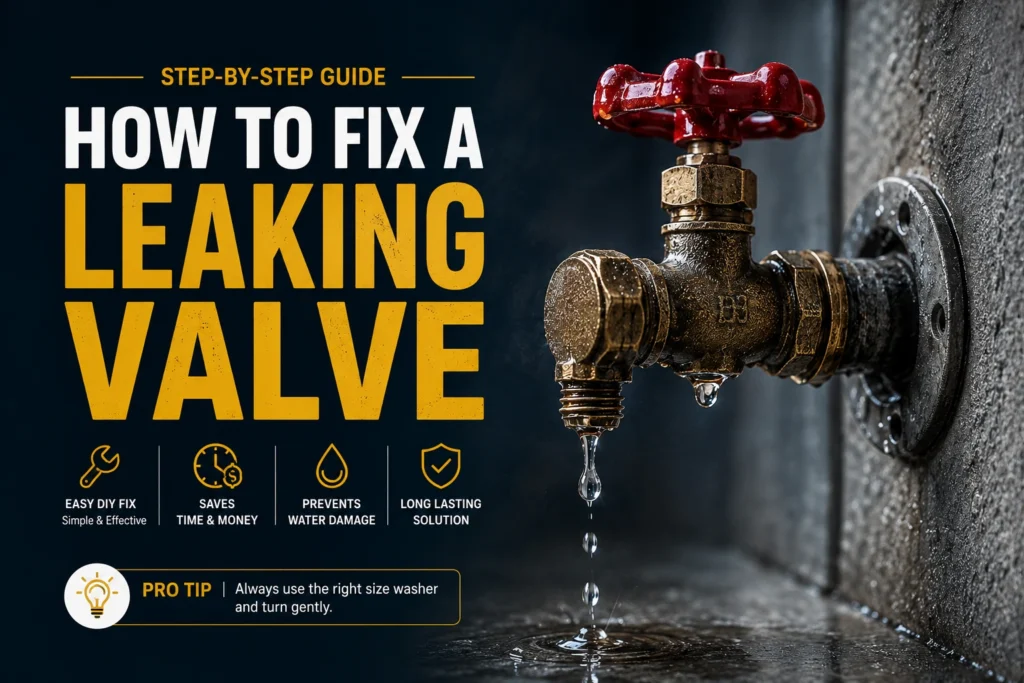
That slow drip under the sink at 2 AM isn’t just annoying — it’s your Pegler plumbing valve telling you something’s wearing out. Most homeowners in Dubai apartments and villas deal with this at least once every few years, and the good news is that a leaking valve is one of the easier plumbing problems to fix yourself. But there’s a catch: fix it wrong, and you’ll be back under that sink within a week.
I’ve walked through this exact process with dozens of homeowners over the years, and the pattern is always the same. Nine times out of ten, it’s a worn washer or a loose gland nut on the valve. The tenth time, the Pegler plumbing valve itself has given up — and that’s when replacement, not repair, is the real answer.
Common Signs of a Leaking Valve
A leaking valve rarely announces itself loudly. Look for:
- Water pooling under the sink cabinet, even when taps are off
- A faint hissing sound near the valve body
- Rust or white mineral deposits (limescale) around the joint
- Reduced water pressure at the tap it feeds
- Damp patches on the wall near hidden valves
If you’re seeing more than one of these, don’t wait. A small leak today is a burst pipe next month — and UAE’s hard water only speeds up corrosion inside cheap valve bodies, a risk factor covered under DEWA’s water supply circulars and regulations.
Tools You’ll Need Before You Start
Before touching anything, gather these:
1. Adjustable wrench or spanner set
2. PTFE (Teflon) tape
3. Replacement rubber washer or O-ring (match the exact size)
4. A bucket and old towels
5. Torch or phone light for tight spaces
Skip the towels and you’ll be mopping the cabinet floor for an hour. Trust me on this one.
Step-by-Step — How to Fix a Leaking Gate Valve
Gate valves are common in older UAE homes and typically leak from the spindle or gland packing.
1. Shut off the main water supply before doing anything else.
2. Open the tap downstream to release trapped pressure and drain remaining water.
3. Loosen the gland nut just below the handle using your wrench.
4. Inspect the gland packing — if it looks frayed or compressed flat, that’s your leak source.
5. Wrap fresh PTFE tape around the spindle threads and re-pack if packing material is available.
6. Tighten the gland nut back — snug, not crushing. Over-tightening cracks the valve body.
7. Turn the water back on slowly and watch the joint for two full minutes.
If the drip continues after this, the valve’s internal seat is likely worn beyond repair — a common issue once a pegler gate valve supplier would flag as end-of-life for the unit.
How to Fix a Leaking Ball Valve
Ball valves are the standard in most modern UAE builds now, and they’re actually easier to service.
1. Shut off the water supply and drain the line.
2. Remove the handle screw and lift the handle off.
3. Loosen the packing nut beneath it with a wrench.
4. Check the O-ring seals — these degrade first, especially with UAE’s mineral-heavy tap water.
5. Replace the O-ring with an exact-match size. Don’t guess; a slightly wrong diameter will leak again in weeks.
6. Reassemble, tighten the packing nut, and reattach the handle.
7. Restore water pressure gradually and test for at least five minutes.
Most reliable pegler ball valve supplier stock comes with standardized O-ring sizes, which honestly makes future replacements far less of a headache than off-brand alternatives.
When the Problem Isn’t the Seal — It’s the Valve Itself
Here’s the thing most DIY guides skip: sometimes you can replace every washer and O-ring perfectly, and the valve still leaks. That usually means the valve body has internal corrosion, a cracked seat, or it simply wasn’t rated for your system’s pressure to begin with.
This shows up most with pressure reducing valves and thermostatic valves, since both regulate flow under constant mechanical stress. A pegler pressure reducing valve that’s been silently miscalibrated for months won’t leak obviously — it’ll just slowly damage downstream fittings until something finally gives. Same goes for a pegler thermostatic valve in mixed shower systems; once the internal cartridge wears, no amount of tightening fixes it.
If you’ve done the repair steps above and the leak persists, stop. Replace the valve rather than fighting it further.
Why Valve Brand Matters — Pegler Plumbing Valves Stockist
Not every valve sold in Dubai hardware shops is built the same, and this is where most homeowners get burned twice. A generic valve might cost less upfront, but with UAE’s water hardness and pressure variability, cheap brass fittings corrode fast — sometimes within a single year.
Pegler has been a trusted name in plumbing valves for over a century, and Junaid Group is a genuine pegler plumbing valves stockist based in Dubai, supplying gate valves, ball valves, pressure reducing valves, and thermostatic valves for residential and commercial projects across the UAE. As an authorized pegler dealer and pegler distributor, Junaid Group sources directly, so what you buy is the real product — not a grey-market import with an unclear warranty.
If you’re searching for a pegler supplier in UAE who can match the exact valve size and pressure rating for your home, store.junaidworld.com carries the full Pegler range with technical guidance included. For apartment residents and villa owners alike, getting the right valve size from a proper pegler supplier the first time saves you from repeating this entire repair process next year.
Common Mistakes People Make With Valve Repairs
Over-tightening the gland nut.
This is the single most common mistake. It feels like it should stop the leak, but it usually cracks the valve body or deforms the packing, making the leak worse.
Using the wrong O-ring size.
A “close enough” O-ring will hold for a few days, then fail again. Always match the exact manufacturer size.
Ignoring the pressure rating.
Installing a standard valve where a pressure reducing valve is needed is a mistake I see constantly in villa renovations — it works fine until the system pressure spikes and the fitting fails.
Skipping PTFE tape on threaded joints.
It takes thirty seconds and prevents most future drips.
Frequently Asked Questions
Q: Can a leaking valve be fixed without replacing it?
A: Yes, in most cases. If the leak comes from worn washers, O-rings, or loose gland packing, a repair works fine. Replace the valve only if the body itself is cracked, corroded, or the internal seat is damaged beyond repair.
Q: How do I know if I need a gate valve or a ball valve replacement?
A: Check your current valve type first — gate valves have a round handle you turn multiple times, ball valves have a lever you turn a quarter-turn. Always replace like-for-like unless a plumber recommends upgrading.
Q: Where can I buy genuine Pegler valves in Dubai?
A: Junaid Group is an authorized Pegler stockist in the UAE, supplying gate valves, ball valves, pressure reducing valves, and thermostatic valves through store.junaidworld.com, with sizing support for both residential and commercial projects.
Q: How often should home plumbing valves be inspected?
A: Once a year is a reasonable minimum in the UAE, given the hard water. Homes with older galvanized piping or villas with pressure fluctuations benefit from inspecting valves every six months.
Final Thoughts
A dripping valve is rarely a five-minute fix, but it’s almost never a reason to call an emergency plumber either. Work through the washer, packing, and O-ring checks first — that solves most leaks. When the valve itself is the problem, don’t patch it repeatedly. Replace it with a proper Pegler valve sized correctly for your system, and you’ll likely not think about that joint again for years. If you’re unsure which valve your home needs, reach out to Junaid Group’s team at store.junaidworld.com for sizing help before you buy.